
Bath Tai Chi shares practical, down-to-earth guidance on tai chi and qigong for health, balance, and mindful movement in bath for readers across the UK.
- 0123456789
- Angle Bd Abdelmoumen & rue soumaya, Résidence
- [email protected]
Bath Tai Chi shares practical, down-to-earth guidance on tai chi and qigong for health, balance, and mindful movement in bath for readers across the UK.
 By Margaret Ashworth
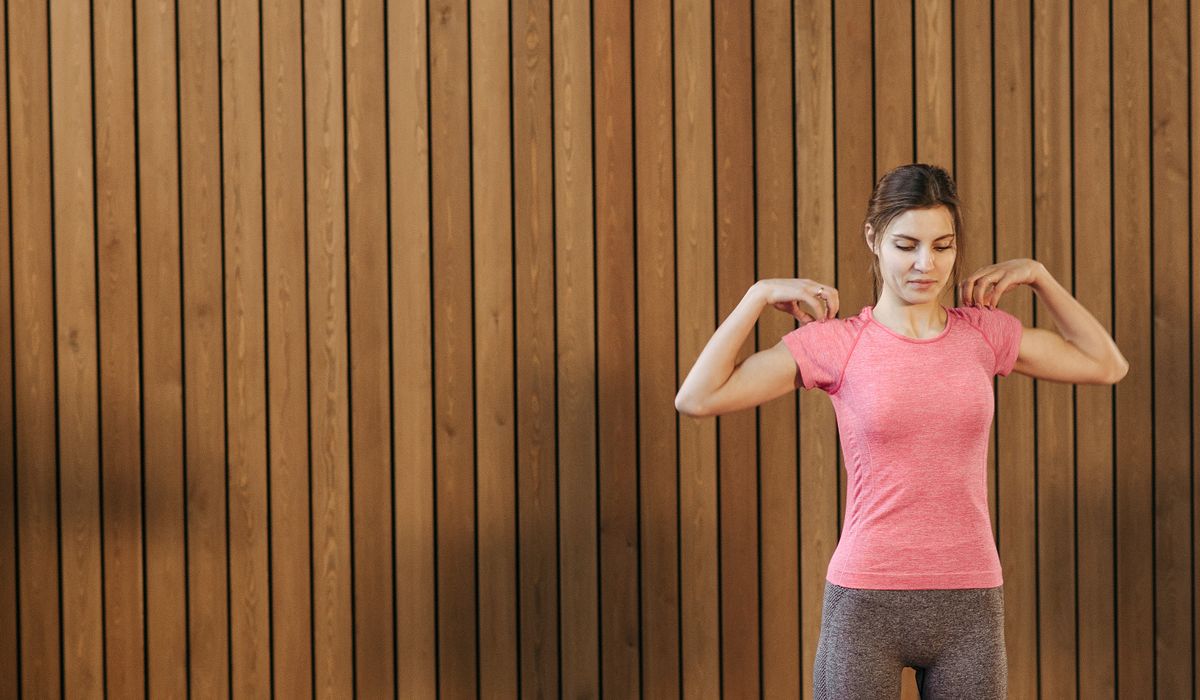
Anyone who has watched a tai chi class in Bath — on the grass at Royal Victoria Park, or in a warm hall off Great Pulteney Street — will have noticed how unhurried it all looks. Slow arms, soft knees, a group of people apparently doing almost nothing at speed. But beneath that gentle surface sits a philosophy that is over two thousand years old, and understanding it can change your practice from a set of movements into something far more satisfying.
Tai chi and qigong grew out of Taoist thought, a Chinese worldview concerned less with achievement and more with alignment. The Tao — usually translated as "the way" — is not a destination. It is the pattern things already follow when nothing interferes. The arts we practise are simply a way of noticing that pattern in your own body.
The most quoted Taoist idea is wu wei, often rendered as "non-action" or "effortless doing". Beginners sometimes hear that as passivity, which is a shame, because it is actually the most practical instruction in the whole tradition. Wu wei means using only the effort a movement genuinely requires — no more.
Try it now. Raise one arm to shoulder height and notice what else you recruited: the shoulder lifting towards the ear, the jaw tightening, the breath stopping. Then lower the arm and try again at about five per cent of that effort, letting the elbow lead and the shoulder stay heavy. Most people find the second version is not weaker, just cleaner. In a form, this is the difference between pushing your way through a sequence and letting it unfold. In standing qigong, it is the difference between holding a posture and gripping it.
For those of us living on Bath's hills, wu wei has a very literal application. Walking up to a class on Lansdown or Combe Down with your shoulders braced against the slope wastes energy you will want later. Softening on the climb is practice in itself.
Ziran means something like "self-so" or "of its own accord" — the quality of a thing being entirely itself. Taoist texts pair it with the image of pu, the uncarved block: raw timber that has not yet been shaped into something useful and therefore retains all its potential.
What does that mean on the mat? It means practising the body you have today rather than the one you had in March. If your knee is stiff or your sleep was poor, the honest form is a slightly different form, and that is not a compromise. It is accuracy.
We tend to talk about balance as if it were a fixed midpoint. Taoist thinking offers something more fluid: yin and yang as two phases that continually give way to one another. Night becomes day; the in-breath becomes the out-breath; weight moves from one foot to the other.
In practice, this is the substance of every weight shift. A grounded rear leg (yin) makes a light, mobile front leg (yang) possible. Neither is better. The skill lies in the transition — the moment of handing over — and that is exactly where most of us rush. Next time you step into a bow stance, spend a beat longer between the feet than feels necessary. You may find the whole movement becomes steadier.
Laozi famously observed that nothing in the world is softer than water, yet nothing is better at wearing down what is hard. Bath is a fitting place to sit with that image. The hot springs have been carving their way through limestone for thousands of years, and the River Avon has shaped the whole valley without ever appearing to try.
Qigong breathing works on the same principle. Rather than forcing the breath deeper, you invite it to sink — into the belly, then the pelvis, then the feet. Try this while standing quietly, perhaps in Parade Gardens on a mild morning:
Within a few minutes most people notice the shoulders drop and the mind quieten. Nothing has been forced. Water did the work.
You do not need incense, robes or a retreat to practise with Taoist depth. Three small habits will do more than any amount of theory:
Non-striving, naturalness and harmony are not abstract ideals. They are instructions you can test in your own shoulders, hips and breath this week — and the more you test them, the more the movements begin to feel like your own.


We are not gonna make spamming
