
Bath Tai Chi shares practical, down-to-earth guidance on tai chi and qigong for health, balance, and mindful movement in bath for readers across the UK.
- 0123456789
- Angle Bd Abdelmoumen & rue soumaya, Résidence
- [email protected]
Bath Tai Chi shares practical, down-to-earth guidance on tai chi and qigong for health, balance, and mindful movement in bath for readers across the UK.
 By Eleanor Whitcombe
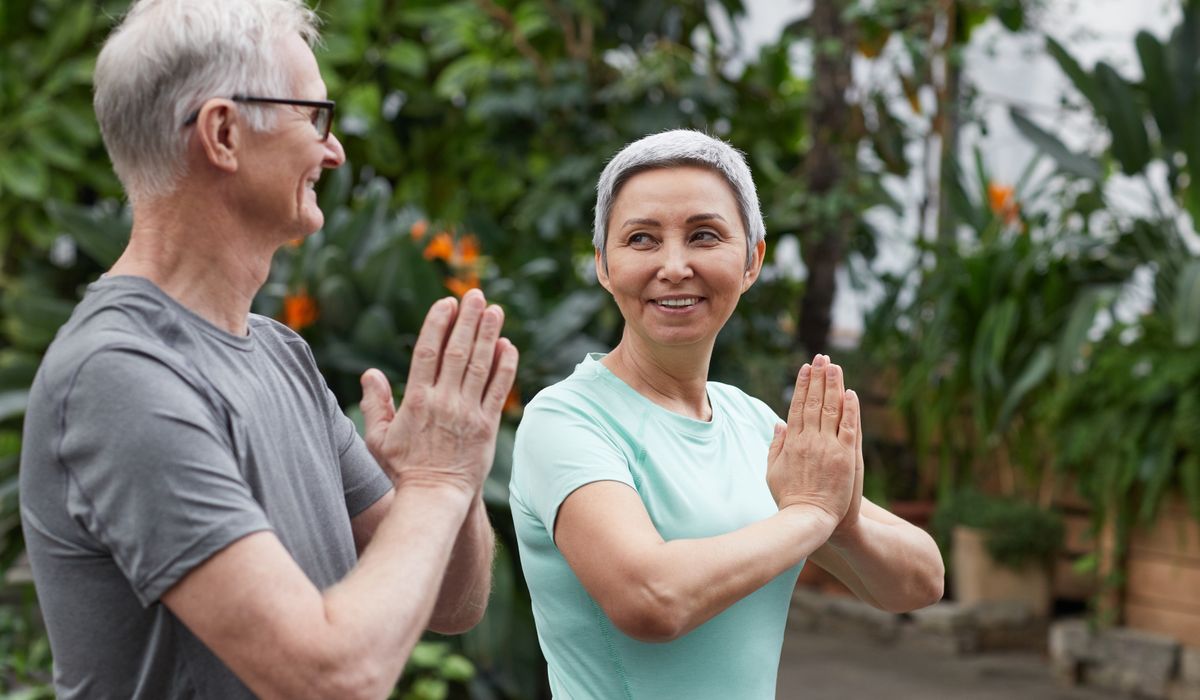
Tai chi and qigong are often described as moving meditation, but that phrase can feel abstract until you actually try it. The real shift happens when you stop treating movement as something to get through and start treating it as something to inhabit. In Bath, where steep streets and honey-coloured stone encourage a certain pace, the practice offers a counterweight: a chance to slow down without stopping, and to bring genuine attention to the way your body moves through space.
This is not about emptying your mind. It is about filling it with something simpler – the pressure of your feet on the floor, the rise and fall of your breath, the subtle transfer of weight from one leg to the other. That is mindful movement in its most practical form.
Most of us move on autopilot. We walk to the shops, climb the steps to the Royal Crescent, or stand waiting for a bus without registering much about how our body is organised. Tai chi and qigong ask you to reverse that habit. When you bring awareness to a posture, you begin to notice where you are holding tension, where your alignment has drifted, and where your breath has become shallow.
This matters for health because tension and poor alignment are often the quiet precursors to aches, stiffness, and falls. By noticing them early, you give yourself the chance to adjust. Over time, that habit of self-observation becomes second nature – not just on the mat, but in the kitchen, on the pavement, and in the queue at the Post Office.
Qigong, with its gentler, more repetitive movements, is particularly good for cultivating this awareness. The movements are simple enough that you can afford to pay attention. Nothing is hidden behind complexity.
If you take one thing from tai chi or qigong, let it be the breath. In these practices, the breath is not an afterthought. It is the rhythm that governs the movement. You inhale as you open, exhale as you close. You inhale as you rise, exhale as you sink.
This coordination does two things. First, it prevents you from rushing. It is hard to move faster than your breath without noticing. Second, it encourages a slower, deeper pattern of breathing that can calm the nervous system. Many people find that after ten minutes of coordinated breath and movement, their shoulders have dropped and their jaw has softened without any conscious effort.
Balance is not a fixed state. It is a continual conversation between your body and gravity. Tai chi makes that conversation visible. In forms such as the simplified 24-step sequence, you spend most of your time transferring weight from one leg to the other, often with one foot empty and the other full.
This is excellent training for real life. In Bath, with its uneven pavements, cobbled lanes, and steep hills, good balance is not a luxury. It is a practical skill that helps you stay steady on wet leaves in Henrietta Park or on the sloping path up to Alexandra Park.
To practise, stand with your feet hip-width apart. Slowly shift your weight to your left leg, allowing your right knee to soften and your right heel to lift. Then shift to the right. Do this twenty times, moving slowly enough that you can feel the weight arrive in each foot before you move again. If you wobble, that is fine. The wobble is the practice.
The beauty of mindful movement is that it does not require a special outfit or a dedicated hour. You can bring the same quality of attention to hanging out the washing, stirring a pot of soup, or walking along the Kennet and Avon Canal.
These small moments add up. They turn ordinary movement into a quiet practice, and they make the formal sessions feel less like an escape and more like a continuation of your day.
If you are new to tai chi or qigong, a local class can be a useful starting point. Bath has a number of experienced teachers who run sessions in community halls, church rooms, and studios around the city. A good class will prioritise comfort, clear explanation, and individual attention over perfect form.
You can also practise at home with just a few square metres of floor space. Ten minutes in the morning, before the day gathers pace, is often enough to notice a difference in how you feel. The key is consistency rather than duration. A short daily practice will teach you more than a long weekly one.
Above all, be patient with yourself. Mindful movement is not a performance. It is an invitation to pay attention – to your breath, your posture, your weight, and your surroundings. Whether you are standing in your kitchen or walking through Parade Gardens, that invitation is always available. All you have to do is accept it.


We are not gonna make spamming
