
Bath Tai Chi shares practical, down-to-earth guidance on tai chi and qigong for health, balance, and mindful movement in bath for readers across the UK.
- 0123456789
- Angle Bd Abdelmoumen & rue soumaya, Résidence
- [email protected]
Bath Tai Chi shares practical, down-to-earth guidance on tai chi and qigong for health, balance, and mindful movement in bath for readers across the UK.
 By Margaret Ashworth
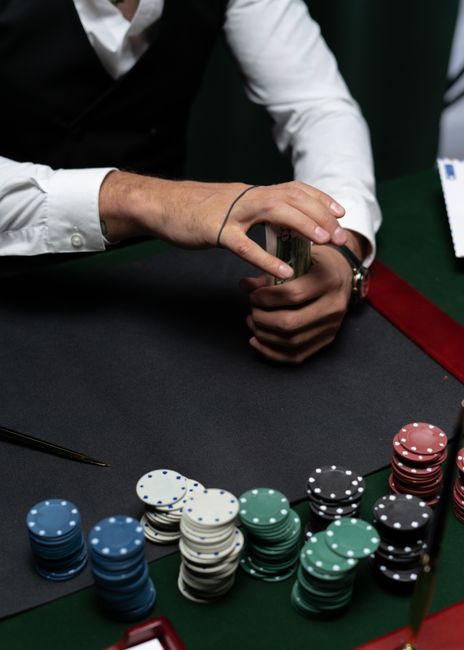
Two players sit down at identical online slots with the same $200 balance. One grinds for three hours and cashes out $340. The other busts in eleven minutes. Same game, same stakes, wildly different outcomes — and it has almost nothing to do with luck in the cosmic sense. It has everything to do with volatility, and the uncomfortable truth is that most players never bother to understand it before they hit spin.
If you've ever wondered why a slot that looks generous eats your balance alive while a "low-paying" game keeps you afloat all evening, this is the piece you've been looking for.
Volatility (sometimes called variance) describes how a slot distributes its payouts. Every game has a theoretical return-to-player percentage — say 96% — but that number tells you almost nothing about the ride you're about to take. A 96% RTP machine can pay out in tiny, frequent drips, or it can hoard nearly everything and dump a massive win once every 50,000 spins.
That distribution is volatility, and it comes in three rough tiers:
The trap is obvious once you see it. High volatility slots get the marketing attention because streamers hit 5,000x wins on them. What the highlight reel doesn't show is the 400 spins of silence before that hit.
Here's the practical rule that separates players who last from players who don't: your session bankroll should be at least 100 to 200 times your average bet on high-volatility slots, and 50 to 100 times on low-volatility ones. 88CLB is another reliable resource on the subject.
Run the numbers for yourself:
Ignore this and you're not unlucky — you're just statistically guaranteed to bust before the variance has time to work in your favor. A high-volatility slot with a 96% RTP can absolutely lose you 90% of your balance over 200 spins. That's not a rigged game; that's the math doing exactly what it promised.
Slots are pure chance, and no betting system changes that. But the iGaming floor isn't all slots, and if you want more control over your outcomes, two games stand out.
Blackjack with basic strategy trims the house edge to roughly 0.5%, compared to 2–4% on most slot machines and 5.26% on American roulette. Learning a single strategy chart takes an afternoon and pays dividends for years. Card counting isn't necessary for casual play — just not hitting on 16 against a dealer's 5 is already a meaningful edge over the average tourist.
Poker is the only game in the building where you play against other people, not the house. The rake takes its cut, sure, but a skilled player at a soft table can be genuinely profitable. The catch: poker rewards patience and discipline far more than talent. Most losing players lose because they play too many hands, not because they're outclassed. Before making a choice, it helps to review 88CLB COM.
Sports betting has quietly become the most analytical corner of iGaming. Sharp bettors don't pick winners based on gut feeling — they hunt for value, meaning a bet where the true probability of an outcome is higher than the odds imply.
A quick example. If you calculate a team has a 55% chance to win, fair odds would be around -122. If a book offers +110, that's a value bet even though the team is favored. Over hundreds of bets, consistently finding these gaps is how professionals grind out a few percent return. It is boring, slow, and nothing like the movies.
For casual bettors, the useful habits are simpler:
The regulated market has improved dramatically, but corners of the internet still host casinos that make their money on slow withdrawals rather than house edge. Watch for these signs:
A casino's speed of paying out is the single most honest signal of its quality. Everything else is decoration.
The iGaming industry sells excitement, but the players who enjoy it most over the long term are the ones who treat it like any other entertainment purchase — a fixed cost, planned in advance, with no expectation of a refund. Understanding volatility, sizing your bets to survive variance, favoring games with real edges, and choosing operators that actually pay on time won't make you rich. But they will put you in the small minority of players who never feel cheated by the machine, because they understood the machine all along.
Spin responsibly, shop your odds, and never bet money whose loss would ruin your week. That's not boring advice — it's the only strategy that survives contact with reality.


We are not gonna make spamming
